
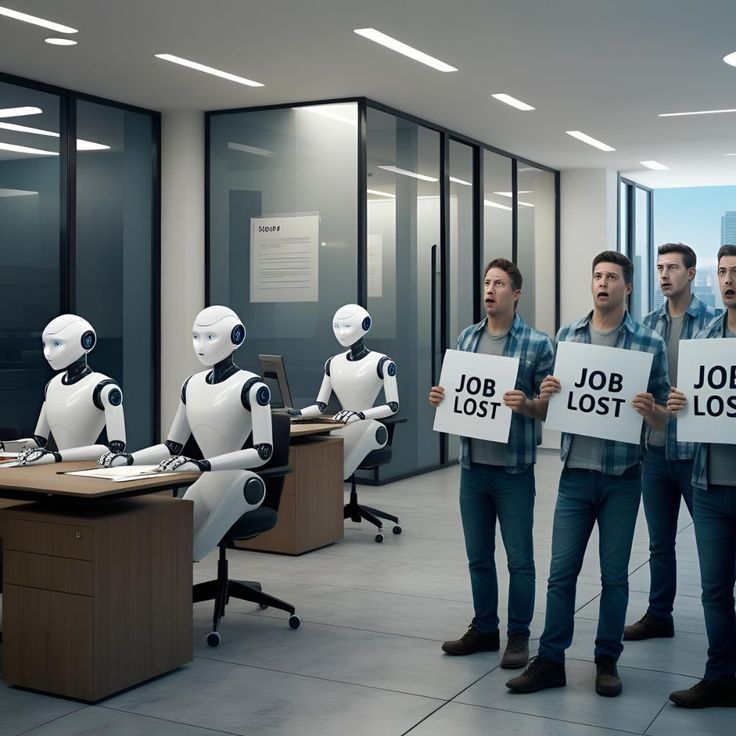
Artificial intelligence is changing the workplace faster than many people expected. AI can now write text, analyze information, generate images, summarize documents, answer questions, automate repetitive tasks, and assist professionals across many industries.
These developments have understandably created concerns about job security. Many workers and job seekers are asking an important question: Which jobs are likely to survive as AI becomes more advanced?
The answer is more complicated than simply dividing jobs into “safe” and “unsafe” categories. AI can automate certain tasks within almost any profession, but that does not necessarily mean the entire occupation will disappear.
In many careers, AI is more likely to become a tool that helps workers perform their jobs faster and more effectively. Jobs that require human relationships, physical presence, judgment, creativity, leadership, negotiation, responsibility, or complex decision-making can be particularly difficult to automate completely.
For Nigerian job seekers, understanding this distinction is increasingly important. Instead of looking for a career that has absolutely no exposure to AI, it may be more useful to develop skills that allow you to work effectively alongside AI.
This article explores jobs where AI is more likely to assist workers than completely replace them, why these professions may remain valuable, and how job seekers can prepare for an AI-assisted workplace.
AI Usually Automates Tasks, Not Entire Jobs
One of the biggest misunderstandings about artificial intelligence and employment is the assumption that if AI can perform one task, it will automatically eliminate the entire job.
In reality, most jobs consist of multiple tasks.
For example, a marketing professional may spend time:
1. Researching customers
2. Writing content
3. Analyzing data
4. Meeting clients
5. Developing strategies
6. Managing campaigns
7. Negotiating with partners
8. Presenting results
AI may help with research, writing, and data analysis, but it does not necessarily replace the person’s ability to understand a client’s business, make strategic decisions, communicate with stakeholders, and take responsibility for results.
This is why learning to use AI can be more valuable than simply trying to avoid it.
What Makes a Job More Difficult to Replace With AI?
Some characteristics make complete automation more difficult.
Jobs are generally harder to automate when they require several of the following:
1. Human Interaction
Jobs involving frequent communication, trust, empathy, and relationship-building can be difficult to automate completely.
Physical Presence
Some occupations require workers to physically interact with people, equipment, buildings, animals, or unpredictable environments.
2. Complex Judgment
AI can provide recommendations, but humans may still need to make decisions involving uncertainty, ethics, risk, or responsibility.
3. Creativity
AI can generate creative material, but professionals are often still needed to determine what is appropriate, useful, original, and aligned with a particular goal.
4. Leadership
Managing people requires motivation, conflict resolution, accountability, and emotional intelligence.
5. Responsibility
In many professions, someone must ultimately take responsibility for decisions and outcomes.
With these factors in mind, several career areas stand out.
Healthcare Professionals
Healthcare is one of the clearest examples of an industry where AI can assist professionals without necessarily replacing them.
AI can help healthcare workers with tasks such as:
👉Analyzing medical information
👉Organizing patient records
👉Supporting diagnostic processes
👉Identifying patterns in data
👉Scheduling
👉Administrative work
However, healthcare involves much more than analyzing information.
Doctors, nurses, pharmacists, therapists, and other healthcare professionals interact directly with patients. They must understand individual circumstances, communicate difficult information, make judgments, and respond to unexpected situations.
Patients also need reassurance, empathy, and human interaction.
AI can therefore become an important assistant while healthcare professionals remain responsible for patient care.
Nurses and Care Workers
Nursing and caregiving involve substantial human interaction.
A nurse may need to:
👉Monitor a patient’s condition
👉Communicate with family members
👉Provide emotional support
👉Administer treatment
👉Respond to emergencies
👉Work with other healthcare professionals
AI-powered systems may assist nurses by providing information or reducing administrative workloads.
However, physically caring for a patient and responding to their emotional and practical needs still requires human involvement.
This makes healthcare support roles an interesting area for people who enjoy helping others.
Teachers and Educators
Education is another profession where AI is more likely to become an assistant than a complete replacement.
AI can help teachers:
👉Create lesson ideas
👉Generate practice questions
👉Explain concepts in different ways
👉Organize educational materials
👉Analyze student performance
👉Provide administrative assistance
However, teaching involves much more than delivering information.
Teachers motivate students, manage classrooms, identify learning difficulties, communicate with parents, encourage participation, and adapt their approach to individual students.
A good teacher also understands that two students can receive the same explanation and require completely different approaches.
AI can support that process, but human educators remain important.
Social Workers and Counsellors
Social work and counselling depend heavily on human relationships.
Professionals in these fields may work with people experiencing:
👉Family difficulties
👉Financial challenges
👉Emotional problems
👉Abuse
👉Disability
👉Housing problems
👉Social exclusion
AI can provide information and administrative assistance, but sensitive human situations often require empathy, trust, confidentiality, and professional judgment.
People may also be reluctant to discuss deeply personal circumstances with automated systems.
For this reason, social workers, counsellors, and related professionals are likely to continue requiring significant human involvement.
Psychologists and Mental Health Professionals
Mental health services involve complex human experiences.
AI may help professionals organize information, support administrative tasks, or provide certain technological tools.
However, professional mental health care requires understanding individual circumstances, building trust, assessing situations, and responding appropriately to human emotions.
The ability to listen carefully and establish a therapeutic relationship remains highly valuable.
People pursuing careers in this field should therefore focus on professional qualifications, communication skills, ethical practice, and responsible use of technology.
Skilled Trades
Many skilled trades require physical work in unpredictable environments.
Examples include:
👉Electricians
👉Plumbers
👉Carpenters
👉Welders
👉Mechanics
👉HVAC technicians
👉Construction workers
👉Equipment technicians
AI may help these professionals with diagnostics, planning, documentation, or technical information.
However, a technician working inside a building, repairing equipment, installing electrical systems, or solving an unexpected physical problem still needs to interact with the real environment.
Robotics may eventually automate certain tasks, but widespread automation of unpredictable physical work can be much more challenging than automating purely digital tasks.
Electricians
Electricians combine technical knowledge with physical problem-solving.
An electrician may need to:
👉Inspect electrical systems
👉Identify faults
👉Install equipment
👉Repair wiring
👉Interpret technical information
👉Work safely in different environments
AI can provide technical assistance, but the professional still needs to inspect the actual environment and perform the physical work.
This makes electrical skills potentially valuable in an increasingly automated economy.
Plumbers and Maintenance Technicians
Plumbing problems rarely occur in perfectly predictable conditions.
A professional may arrive at a location and discover that the actual problem is different from what the customer initially described.
They must inspect the situation, determine the cause, decide on a solution, and physically complete the work.
AI can provide information, but the plumber remains responsible for the practical execution.
Construction Professionals
Construction combines physical work, planning, coordination, safety, and problem-solving.
AI can help with:
👉Project planning
👉Building design
👉Cost estimates
👉Scheduling
👉Documentation
However, construction sites are dynamic environments.
Workers encounter:
-Weather changes
-Material problems
-Equipment issues
-Unexpected site conditions
-Coordination challenges
Human professionals are still needed to manage these situations.
Project Managers
Project management is another field where AI can provide significant assistance.
AI can help project managers:
👉Create schedules
👉Summarize meetings
👉Track tasks
👉Analyze project data
👉Identify potential delays
👉Prepare reports
But project managers also have to manage people.
They negotiate deadlines, resolve conflicts, communicate with stakeholders, make decisions, and keep teams motivated.
A project can have a perfect automated schedule and still fail because the people involved are not aligned.
Human leadership therefore remains critical.
Sales Professionals
Sales is heavily based on human psychology and relationships.
AI can help sales professionals:
👉Research prospects
👉Generate emails
👉Analyze customer data
👉Identify potential leads
👉Prepare presentations
👉Automate follow-ups
However, closing important deals often involves trust, negotiation, persuasion, and understanding the customer’s specific situation.
A customer may have concerns that are not obvious from data.
An experienced salesperson can listen, ask questions, adjust their approach, and negotiate a solution.
AI can make salespeople more productive without necessarily eliminating the need for them.
Business Development Professionals
Business development involves identifying opportunities and creating relationships between organizations.
AI can assist with:
👉Market research
👉Competitor analysis
👉Lead generation
👉Data analysis
But business development professionals still need to build partnerships, negotiate agreements, attend meetings, and understand the interests of different organizations.
Human relationships remain a major part of this career.
Human Resources Professionals
Human resources is another field likely to be transformed by AI rather than completely eliminated.
AI can help HR professionals:
👉Screen applications
👉Organize employee information
👉Draft documents
👉Analyze workforce data
👉Schedule interviews
👉Answer routine questions
However, HR professionals also deal with sensitive issues involving employees.
They may need to handle:
-Workplace conflicts
-Performance problems
-Employee relations
-Recruitment decisions
-Organizational culture
-Leadership development
These responsibilities require judgment and communication.
Lawyers and Legal Professionals
AI can assist lawyers with:
Legal research
Document review
Summarization
Contract analysis
Information organization
However, legal work involves interpretation, strategy, negotiation, advocacy, and professional responsibility.
A lawyer may need to understand the unique circumstances of a client and determine how legal principles apply to that situation.
AI can make legal professionals more efficient while leaving many important responsibilities in human hands.
Cybersecurity Professionals
As organizations increasingly depend on technology, cybersecurity becomes increasingly important.
AI can help cybersecurity teams identify:
👉Suspicious activity
👉Unusual network behavior
👉Potential vulnerabilities
👉Security threats
But attackers can also use sophisticated technology.
Cybersecurity professionals need to investigate incidents, make strategic decisions, understand organizational risks, and respond to evolving threats.
The field is therefore likely to involve a combination of automation and human expertise.
Cybersecurity is a Career Worth Watching
People interested in technology may consider developing skills in:
-Network security
-Cloud security
-Risk management
-Security analysis
-Incident response
-Security operations
AI knowledge can become an advantage rather than a threat.
Professionals who understand both cybersecurity and AI may be particularly valuable as organizations adopt more automated systems.
Digital Marketing Professionals
Digital marketing is already being transformed by AI.
AI can help marketers:
👉Generate content ideas
👉Analyze campaigns
👉Research audiences
👉Create drafts
👉Automate repetitive tasks
👉Analyze customer behavior
However, successful marketing requires strategy.
Marketers still need to understand:
-Brand positioning
-Customer psychology
-Market conditions
-Business objectives
-Creative direction
A marketer who knows how to use AI may therefore become more productive than one who refuses to use it.
Graphic Designers and Creative Professionals
AI image-generation tools have created significant changes in the creative industry.
However, businesses still need professionals who can understand their brand and communicate visual ideas effectively.
Designers may use AI to:
👉Generate concepts
👉Explore styles
👉Create drafts
👉Speed up repetitive tasks
But they still need to understand composition, branding, typography, visual communication, and client requirements.
The role may evolve rather than disappear.
Video Editors and Content Creators
AI can automate parts of video production, including:
👉Captions
👉Transcription
👉Basic editing
👉Background removal
👉Audio cleanup
👉Content repurposing
However, storytelling remains important.
A professional video editor needs to understand pacing, emotion, audience expectations, and the purpose of the content.
Content creators who learn to use AI tools may be able to produce more content without necessarily reducing the value of their creative judgment.
Journalists and Investigative Researchers
AI can help journalists:
👉Transcribe interviews
👉Summarize documents
👉Search large datasets
👉Generate initial drafts
👉Organize research
But journalism also requires verification, interviewing, investigation, source evaluation, and ethical judgment.
A human journalist must determine whether information is credible and whether publishing it is responsible.
This is particularly important because AI systems can produce inaccurate or misleading information.
Skilled Managers and Business Leaders
Leadership is difficult to automate because managing people involves complex human behavior.
Managers must:
👉Motivate employees
👉Resolve disagreements
👉Make difficult decisions
👉Communicate organizational goals
👉Build trust
👉Manage change
AI can provide recommendations and data, but leadership requires people to accept decisions and work together.
The best managers may increasingly use AI as a decision-support tool.
Jobs That Combine Human Skills With AI Skills
One of the biggest opportunities may not be choosing between “AI jobs” and “non-AI jobs.”
Instead, workers can develop careers that combine professional expertise with AI literacy.
For example:
✅Marketing + AI
✅Finance + AI
✅Healthcare + AI
✅Education + AI
✅Human Resources + AI
✅Cybersecurity + AI
✅Design + AI
This combination can make workers more productive and adaptable.
Human Skills Will Become More Valuable
As AI handles more routine digital tasks, certain human skills may become increasingly important.
These include:
1. Communication
Being able to explain ideas clearly remains valuable.
2. Critical Thinking
Workers need to evaluate AI-generated information rather than accepting everything automatically.
3. Emotional Intelligence
Understanding people’s emotions is important in leadership, healthcare, sales, education, and many other fields.
4. Creativity
Generating useful ideas and deciding which ideas are valuable remain important.
5. Problem-Solving
Complex real-world problems often require context and judgment.
6. Adaptability
Technology changes quickly, so workers need to keep learning.
How Nigerian Job Seekers Can Prepare for AI
Nigerian graduates and professionals should not simply ask:
“What job will AI never replace?”
A better question is:
“What skills can I develop that allow me to work effectively with AI?”
Start by choosing a career area that interests you.
Then identify the AI tools being used in that industry.
Learn how to use them responsibly while developing the underlying professional skills that remain valuable.
For example, someone interested in digital marketing could learn:
👉SEO
👉Content strategy
👉Analytics
👉Social media marketing
👉AI-assisted content creation
Someone interested in accounting could learn:
-Financial analysis
-Accounting software
-Data analysis
-AI-assisted reporting
The goal is to become a professional who can use technology rather than compete against it.
Don’t Stop Learning Because of AI
The biggest mistake a job seeker can make is assuming that AI means learning is no longer necessary.
The opposite may be true.
As technology develops, workers may need to continuously update their skills.
Consider learning:
👉AI literacy
👉Data analysis
👉Digital communication
👉Industry-specific software
👉Problem-solving
👉Critical thinking
Professional development can make you more adaptable when job responsibilities change.
Frequently Asked Questions
📢Which jobs are least likely to be completely replaced by AI?
Jobs involving human relationships, physical work, leadership, complex judgment, creativity, and unpredictable environments may be more difficult to fully automate. However, no career can be guaranteed to remain unchanged.
📢Will AI eliminate jobs?
AI can automate certain tasks and may reduce demand for some roles while creating new responsibilities and occupations. Its effect will vary significantly across industries.
📢Should I avoid learning a career that uses AI?
Not necessarily. In many cases, learning how to use AI alongside professional skills can make you more competitive.
📢Are skilled trades safe from AI?
Skilled trades may be more difficult to fully automate because many require physical work in unpredictable environments. Nevertheless, technology can still change how these professionals work.
📢Will AI replace teachers?
AI can assist teachers with lesson preparation, administrative work, and educational resources, but teaching involves relationships, classroom management, motivation, and human judgment.
📢What should students learn for the future?
Students should combine technical or professional expertise with communication, critical thinking, creativity, adaptability, and AI literacy.
Conclusion
Artificial intelligence is changing the workplace, but the future of employment is unlikely to be as simple as humans versus machines. In many professions, AI will become a powerful tool that helps workers perform routine tasks, analyze information, improve productivity, and make better decisions.
Jobs involving healthcare, education, skilled trades, management, sales, cybersecurity, social work, law, digital marketing, creative work, and other human-centered responsibilities may continue to require significant human involvement.
However, workers should not interpret this as a guarantee that these careers will never change. AI will continue to influence how many professionals perform their duties. Some tasks may disappear, new tasks may emerge, and employers may increasingly expect workers to understand AI-powered tools.
For job seekers, the most practical strategy is therefore not to search for a career that AI can never affect. Instead, develop a combination of professional expertise, human skills, and AI literacy.
Learn your profession deeply. Understand how AI is being used in your industry. Learn to evaluate its output. Use it to improve productivity while retaining your own judgment and responsibility.
The workers who thrive in an AI-assisted economy may not be those who avoid technology. They may be those who understand how to combine technology with uniquely human abilities such as communication, empathy, creativity, leadership, critical thinking, and practical problem-solving.
AI is changing the nature of work, but for many careers, the future may be less about human versus AI and more about humans working with AI.
Related posts:

BIC Nigeria Recruitment 2026: Area Sales Representatives and Supervisors Wanted Across Multiple Stat…

Ardova Plc is Hiring in Lagos, Nigeria

Misan & Co Recruitment 2026: 5 Job Vacancies and Internships

Election Security Monitor Jobs at KDI in 6 Nigerian States – 2027 Election

Dokitami Video Editor and Content Creator Jobs 2026

Flour Mills of Nigeria Plc Recruitment 2026 – Multiple Vacancies

ECOWAS Recruitment 2026 – Multiple Positions in Nigeria

Customer Service Officer – TravelDeer Nigeria

Avonix Place Jobs with Accommodation in Lagos

Sales Representative – MSI Reproductive Choices

Front Desk & Customer Care Executive – Eris Creative Studio

Leave a Reply